
Bottlenecks in the Application of Foliar Fertilizer: 2026 Comprehensive Review
1 Introduction
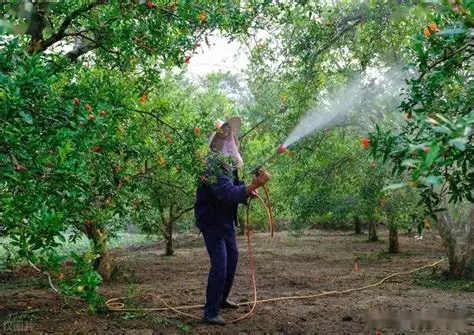
As one of the core approaches in plant nutrient management, foliar fertilization has become an indispensable technological component of modern agriculture, thanks to its remarkable advantages in rapid nutrient supplementation, stress mitigation, and enhancement of crop quality. Compared with soil fertilization, foliar fertilization bypasses the limitations imposed by soil fixation and root uptake, delivering nutrients directly into plants through stomata or the cuticle layer, thereby significantly shortening the time required for visible effects and improving fertilizer utilization efficiency [1]. However, as agricultural intensification increases and extreme weather events become more frequent, foliar fertilizers have revealed several deep-seated challenges in large-scale applications, including unclear absorption and conversion mechanisms, poor environmental adaptability, imbalanced cost-effectiveness, and uncertain long-term ecological impacts. Although existing studies have demonstrated the yield-increasing and quality-improving effects of foliar fertilizers on specific crops or during particular growth stages, significant knowledge gaps and technical bottlenecks remain regarding their application stability under complex climatic conditions, the identification of burn thresholds at high concentrations, and the industrial implementation of novel smart controlled-release technologies [9]. This article aims to systematically analyze the key challenges in the field of foliar fertilizers—from the perspectives of absorption mechanisms, environmental responses, economic trade-offs, and technological integration—providing valuable insights for developing a new paradigm of foliar fertilizer application that balances yield enhancement, quality improvement, and green sustainability.
2 Research Foundation
This study is based on core literature spanning from June 2021 to June 2026, covering the interdisciplinary field of agronomy, plant nutrition, and materials science. The analytical framework follows a progressive logic—“micro-level physiological response—meso-level environmental adaptation—macro-level industry bottlenecks.” It focuses on empirical data regarding foliar fertilizer applications on typical crops such as poplar, rice, fruit trees (peach, apple, camellia oleifera), tea plants, and Chinese medicinal herbs, with particular attention paid to technical performance in specialized scenarios including drone operations, mulching cultivation, and mine reclamation. By comparing crop physiological indicators—such as chlorophyll content, photosynthetic rate, and dry matter allocation—as well as yield and quality data under different fertilizer types, concentrations, application timings, and environmental conditions, this study identifies the key variables that constrain the effective utilization of foliar fertilizers.
The mechanism of action of foliar fertilizers is based on a dual foundation: the physiological characteristics of plant leaves and the kinetics of nutrient absorption. As the primary organ responsible for photosynthesis in plants, the leaf’s epidermal structure—including cuticle thickness, stomatal density, and trichome distribution—directly determines the efficiency with which exogenous nutrients are retained and penetrated [3]. The nutrient absorption pathway primarily relies on the synergistic interplay between stomatal opening and closing and diffusion through the cuticle. Stomatal uptake is significantly influenced by environmental temperature and humidity as well as the surface tension of the fertilizer solution, whereas cuticular penetration is closely related to the size, charge, and solubility of solute molecules [3].
The current technical system for foliar fertilizers has evolved into various formulations, including inorganic nutrient-based, organic chelate-based, compound formulations combining plant growth regulators, and microbial inoculant-based types [2]. Among these, amino acid chelate fertilizers are widely used in fruit trees and economic crops due to their characteristics of small molecular size, easy absorption, and high complexation stability [2]. Nano-enhanced fertilizers, on the other hand, aim to overcome the diffusion limitations of traditional foliar absorption by altering the physicochemical properties of nutrients [2]. Moreover, the application of controlled-release technology in film-based carriers offers a new materials science approach to extending the duration of foliar fertilizer effectiveness—for instance, poly-lactic acid (PLA)-coated urea films can achieve sustained release over a period of up to half a month, aligning with the early-stage nutrient requirements of crops [7]. However, the microscopic dynamic processes underlying these technologies—particularly the mechanisms governing nutrient transport within the leaf surface and the cuticle—still lack precise quantitative measurements provided by in-situ detection techniques, which has led to there is a discrepancy between the theoretical model and actual field performance [9].
3 Research Findings
3.1 Microscopic Limitations and Threshold Effects of the Absorption and Conversion Mechanism
Existing research has confirmed that foliar fertilization can significantly improve crop physiological indicators; however, its absorption efficiency is strictly constrained by both concentration and the physiological status of the crop. In a poplar cutting seedling trial, foliar fertilization increased stem diameter by 24.56% to 31.40%, seedling height by 16.08% to 21.86%, and chlorophyll content by 44.81% to 64.77%, indicating that foliar nutrition can directly promote the development of photosynthetic organs [1]. Nevertheless, this promoting effect exhibits a clear concentration threshold.
In apple tree studies, although foliar application of selenium, zinc, and calcium fertilizers can enhance net photosynthetic rate, excessive increases in stomatal conductance and transpiration rates at high concentrations lead to a decline in water-use efficiency and even exert an inhibitory effect [12]. Further experiments with melons revealed that while spraying a 1,000-fold dilution of calcium-phosphorus fertilizer can delay leaf senescence and boost root vitality, the effects of different concentration treatments on root vitality exhibit a nonlinear pattern; excessive application may disrupt physiological balance [4]. More critically, the microscopic mechanisms underlying foliar absorption remain largely unknown. The amount of fertilizer solution retained on leaf surfaces, its diffusion rate, and the penetration process through the cuticle are all influenced by a variety of physicochemical properties, including molecular size, charge, and surface tension. Currently, there is a lack of in-situ detection methods capable of precisely quantifying this dynamic process [3]. For instance, although extracellular metabolites from DSE—such as amino acids and peptides—can be directly absorbed and utilized by plants, the specific mechanisms by which their molecular characteristics affect leaf absorption efficiency still require further investigation [3]. Moreover, high-concentration fertilizer solutions under high-temperature conditions can easily induce burn symptoms such as “red discoloration” or “browning necrosis.” The underlying mechanisms involve impaired photosynthesis, imbalances in respiration and transpiration, and metabolic disturbances; however, a standardized threshold for these burn symptoms has yet to be established [9].
3.2 Challenges in Application Stability Under Complex Climatic Conditions
The dramatic fluctuations in environmental factors represent the core bottleneck that hinders the stable application of foliar fertilizers. In studies on fertigation via sprinkler irrigation in tea gardens, both excessively high fertilizer solution concentrations and excessively high ambient temperatures can alter foliar physiological characteristics, increasing the risk of leaf burn. Moreover, different growth stages exhibit markedly different responses to nitrogen and amino acid concentrations [9]. For temperature-sensitive crops such as Anji white tea, although spraying a mixture of amino acids and potassium fertilizer under early spring low-temperature stress can significantly enhance bud density and the weight of 100 buds, it is crucial to precisely match the whitening temperature threshold (20–22°C) to avoid exacerbating cold damage [15]. In large-scale operational scenarios, the application of drone technology has given rise to new challenges related to environmental adaptability. While the micronutrient enrichment effect observed under traditional small-scale sprayer operations—such as a 31.5% increase in zinc content in corn kernels—can be replicated or even optimized under drone-based operations (with a zinc content increase reaching 56.3%), the droplet size, deposition patterns, and microclimatic conditions in open fields created by drones differ significantly from those under conventional operations, necessitating a re-calibration of existing application models [11]. Moreover, extreme weather conditions such as drought, prolonged periods of overcast skies, and late spring frosts pose severe challenges to the stability of foliar fertilizer applications under adverse circumstances. Particularly in orchards suffering from soil salinization or with poor root absorption capacity, although foliar fertilizers can serve as a rapid remedial measure, their short duration of effectiveness makes it difficult to cope with long-term stress [2].
3.3 Imbalance between Cost and Benefit and Uncertainty of Economic Returns
The economic benefits of foliar fertilizers highly depend on the alignment between the timing of application, fertilizer concentration, and crop variety. In rice production, applying microelement water-soluble fertilizers during the tillering-booting stage and the heading stage can increase yield by 6.93% with significant income gains; however, if applied only during the tillering stage, although it increases the number of grains per panicle, it leads to a decline in the setting rate, thereby limiting yield improvement [6]. In studies on fresh-market glutinous corn, while drone-based spraying of multi-element micronutrient fertilizers can simultaneously enrich kernels with zinc, iron, and selenium (with zinc increasing by 56.3% and iron by 34.4%), maximizing economic returns requires integrating this approach with high-yield, high-quality varieties and optimized soil fertilization practices to establish a comprehensive technical model [11].
However, the industrial implementation of new smart controlled-release technologies remains constrained by high costs. Although poly-lactic acid (PLA)-loaded urea-based controlled-release mulch films can achieve sustained release over a period of half a month, aligning with the early-stage nutrient requirements of crops, their high production costs and challenges in meeting adequate light transmittance standards limit large-scale adoption [7]. Moreover, while combining foliar fertilizers with pesticides can reduce costs and enhance efficiency, poor compatibility between these formulations may lead to reduced efficacy or phytotoxicity, thereby increasing farmers’ trial-and-error costs [6].
In the cultivation of Chinese medicinal materials, although trace-element fertilizers can enhance quality, excessive application not only causes toxicity but also increases environmental risks, leading to a decline in the input-output ratio [8].
3.4 Potential Impacts of Long-term Application on Soil Microecology
The long-term effects of foliar fertilization on soil microecology remain controversial. On the one hand, foliar fertilization can reduce the direct reliance on soil nutrients, thereby lowering the risk of nutrient fixation and loss in the soil and exhibiting environmentally friendly characteristics [1]. On the other hand, certain components in foliar fertilizers (such as microbial metabolites) may be transported via the stem to the root system, affecting root activity and the structure of the soil microbial community [3]. In coal mine reclamation areas, while the combined application of DSE extracellular metabolites via foliar spray and root irrigation has been shown to significantly enhance growth indicators of protein mulberry and improve soil carbon flux, the long-term cumulative effects of this practice on soil microbial diversity still require further validation [3].
In the field of heavy metal pollution remediation, the combined application of soil conditioners and foliar blocking agents has been shown to effectively reduce cadmium levels in rice—by 80% in early rice and by 78.46% in late rice. However, single-foliar-blocking measures are constrained by soil type and climatic conditions, leading to unstable reduction effects [18]. Long-term application of foliar blocking agents may alter soil enzyme activity and nutrient cycling; thus, their potential negative impacts on soil ecosystems—such as microbial community imbalance—require in-depth assessment using techniques like high-throughput sequencing [18].
3.5 Industrialization Barriers of New Intelligent Sustained-Release Technology
Although intelligent controlled-release technology theoretically holds the potential to optimize release cycles, its industrialization faces multiple obstacles. First, there is the issue of technological adaptability: most existing controlled-release fertilizers have been developed based on traditional cultivation practices, and their release patterns do not align with the soil microenvironment under new cultivation methods such as film-covered cultivation—where high temperatures beneath the film can accelerate decomposition—leading to seedling burn or insufficient fertilizer efficacy [17]. Second, there is a lack of standardization: different crops and soil types have vastly varying requirements for controlled-release periods, yet there are no unified industry standards or product specifications [7]. Finally, there is a trade-off between cost and benefit: the production of high-end controlled-release materials (such as PLA films) is expensive, and the commercialization path for their multifunctional applications—such as loading other active ingredients—remains unclear, making it difficult to widely adopt these technologies among farmers [7].
4 Research Conclusions
The main pain points in the foliar fertilizer field are concentrated in five areas: the unclear microscopic dynamics of absorption and conversion mechanisms, insufficient application stability under complex climatic conditions, the challenging economic balance between high costs and low returns, uncertainty regarding long-term ecological effects, and industrialization barriers to new smart controlled-release technologies.
1.Limitations of the absorption mechanism: Although foliar fertilization can significantly enhance photosynthetic efficiency and yield, it is constrained by concentration thresholds and environmental factors. High concentrations can easily cause leaf burn, and the microscopic absorption process lacks a precise quantitative model [1][9][12].
2.Environmental Adaptation Challenges: Extreme climates and drone-operated environments have altered the stability of foliar fertilizer application, necessitating a recalibration of application models to account for microclimate fluctuations [9][11].
3.Economic-Ecological Trade-offs: Single-application foliar fertilizers alone cannot ensure long-term stable yields. Instead, they must be integrated with soil fertilization, bio-organic fertilizers, novel agricultural nanoenzyme technologies, and controlled-release technologies to establish a comprehensive regulatory system that balances costs with ecological safety [6][18].
4.Technical Integration Bottleneck: Although intelligent controlled-release technology and drone operations hold great potential, they are currently constrained by cost and standardization. There are issues related to missing components and compatibility, and a mature industrialization model has yet to be established [7][11]. In summary, the key to addressing the pain points in the foliar fertilizer field lies in deepening research on micro-level mechanisms, establishing environmental adaptability standards, promoting integrated technological innovation, and strengthening long-term ecological monitoring—thereby achieving a paradigm shift from “empirical fertilization” to “precise and intelligent fertilization.”
The pain points in the field of foliar fertilizers highlight the urgent need for agriculture technology to shift from “experience-driven” to “data-driven” approaches. At the micro level, the ambiguity surrounding absorption mechanisms leads to a lack of precise basis for fertilizer application decisions, easily resulting in resource waste or risks of phytotoxicity. At the meso level, insufficient environmental adaptability limits the potential for widespread adoption of foliar fertilizers in the context of increasingly frequent extreme weather events. At the macro level, an imbalance between cost and benefits, coupled with delays in technological integration, hinders the large-scale implementation of green and efficient fertilization practices.
The practical implication is that we must break away from the limitations of single fertilization techniques and establish a synergistic regulation system integrating “soil and foliar applications.” For example, in rice cultivation, combining controlled-release fertilizers with foliar fertilizers can simultaneously meet nutrient demands throughout the entire growth period and provide rapid nutrient supplementation during critical growth stages [19]. In areas contaminated by heavy metals, the combined use of soil conditioners and foliar blockers offers a new approach for the safe utilization of cultivated land [18]. Meanwhile, the introduction of smart equipment such as drones necessitates the re-establishment of precision application models based on field microclimates, thereby ensuring efficient and uniform coverage of foliar fertilizers [11].
5 Future Research Directions
Future research should focus on the following key gaps:
1.In-situ analysis of micro-scale mechanisms: Using in-situ detection techniques, quantify the dynamic migration of nutrients within leaf surfaces and cuticles, and develop a molecular-property-based model for predicting absorption efficiency [3][9].
2.Threshold Definition Under Environmental Stress: Systematically study the leaf burn thresholds and optimal application windows for foliar fertilizers in different crops under extreme temperature, humidity, and light conditions, and build an environment-adaptation database [9].
3.Long-term ecological effect assessment: Conduct long-term site-specific trials to evaluate the cumulative impacts of foliar fertilizers (particularly novel biostimulants and slow-release materials) on soil microbial communities, enzyme activities, and nutrient cycling [3][18].
4.Smart Equipment and Precision Application: Develop specialized formulations and spraying parameters for foliar fertilizers tailored for drone operations, and establish an integrated “soil-leaf” technology model to address the standardization challenges in large-scale deployment [11][17].
5.Development of novel carrier materials: Explore low-cost, high-performance controlled-release carrier materials to address the issues of high costs and poor adaptability associated with existing smart controlled-release technologies, thereby promoting industrial-scale implementation [7].
References:
- Yu, L. (2025). Effects of foliar fertilization on growth characteristics of Populus cuttings. Journal of Hunan Ecological Science, (4). (in Chinese)
- Yang, X. W. (2025). Effects of two foliar fertilizers on fruit quality and volatile flavor substances of Jinhuang peach. Journal of Fruit Science, (5). (in Chinese)
- Wang, S. H. (2024). Effects of DSE extracellular metabolites application on growth, photosynthetic efficiency, and nutritional quality of Morus alba in coal mine reclamation areas. Journal of Plant Nutrition and Fertilizers, (11). (in Chinese)
- Liu, Z. G. (2025). Effects of foliar calcium-phosphorus fertilizer on root and leaf physiological characteristics of muskmelon (Cucumis melo). Jiangsu Agricultural Sciences, (19). (in Chinese)
- Xia, J. F. (2025). Effects of foliar fertilizer on spring shoot growth, leaf photosynthetic physiology, and fruiting of Weining short-styled camellia oil tea (Camellia oleifera). Nonwood Forest Research, (1). (in Chinese)
- Gao, M. F. (2026). Application effects of “Bai Meishi” micronutrient water-soluble fertilizer in rice production. Shanghai Agricultural Science and Technology, (1). (in Chinese)
- Yao, Z. Y. (2025). Performance study of polylactic acid biodegradable mulch film loaded with urea prepared by casting method. China Plastics Industry, (12). (in Chinese)
- Yan, Y. T. (2025). Research progress on effects and mechanisms of micronutrient fertilizers on yield and quality of medicinal plants. Soil and Fertilizer Sciences in China, (10). (in Chinese)
- Hu, B. (2025). Research progress on interception rules and scalding mechanisms of sprinkler irrigation and fertilization integration in tea gardens. Journal of Water-Saving Irrigation, (5). (in Chinese)
- Tuolihanayi, N. (2025). Effects of reduced chemical fertilizer combined with bio-organic fertilizer and foliar fertilizer on fruit quality and soil fertility in protected oil peach cultivation. Journal of Henan Agricultural Sciences, (5). (in Chinese)
- Zhao, Q. (2025). Effects of drone-sprayed micronutrients on ear traits and grain zinc, iron, and selenium contents in fresh waxy maize (Zea mays var. amylacea). Journal of Soil and Fertilizers, (10). (in Chinese)
- Zhou, Y. L. (2026). Regulatory effects of foliar selenium, zinc, and calcium fertilizers on photosynthetic characteristics and fruit quality of Xiangfu apple in Nyingchi region. Journal of Fruit Science, (1). (in Chinese)
- Shi, G. Q. (2024). Effects of foliar micronutrient application on seed production of Bromus inermis. Chinese Journal of Grassland, (6). (in Chinese)
- Cheng, F. Q. (2026). Screening experiment of foliar fertilizer types for Huangshan Gouju chrysanthemum (Chrysanthemum morifolium). Anhui Agricultural Science Bulletin, (1). (in Chinese)
- Luo, L. X. (2024). Effects of foliar amino acid and potassium fertilizers on yield and quality of Anji white tea (Camellia sinensis). Journal of Zhejiang University (Agriculture and Life Sciences), (5). (in Chinese)
- Li, W. (2025). Research progress on selenium-enriched technology and industrialization for soybean. Soybean Science, (6). (in Chinese)
- Fu, D. H. (2024). Research status and prospects of rice mulching cultivation technology. China Rice, (6). (in Chinese)
- Zhang, D. J. (2026). Effects of soil conditioner and foliar blocking agent on rice yield and heavy metal content. Modern Agricultural Science and Technology, (1). (in Chinese)
- Yao, Y. F. (2025). Preliminary exploration of combined application of controlled-release fertilizer and foliar fertilizer in rice (Oryza sativa). Journal of Henan Agriculture, (9). (in Chinese)
- Zhang, X. T. (2025). Effects of different application rates of foliar nitrogen fertilizer on dry matter accumulation, allocation, and translocation in maize (Zea mays). Journal of Shenyang Agricultural University, (1). (in Chinese)